
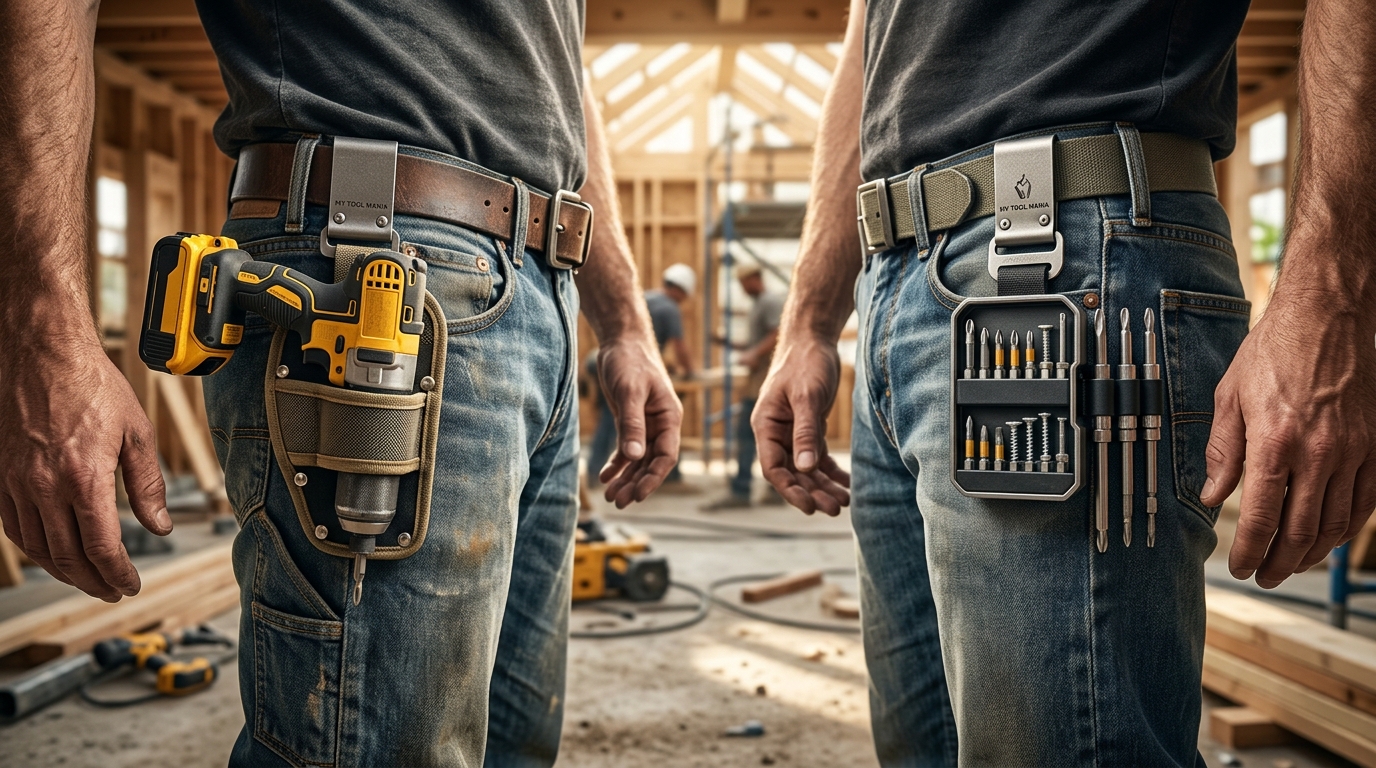
Tool organization is not merely a convenience for professional contractors; it is a critical component of daily efficiency and safety. According to a 2024 industry report on trade productivity, professionals who utilize dedicated belt-mounted storage systems reduce time spent searching for tools by approximately 15 percent during a standard workday. This statistic highlights the tangible value of keeping essential items within immediate reach. When evaluating options for direct pants attachment, the debate often centers on two distinct approaches: the traditional Drill Caddy and the modern Bit Caddy. Understanding the mechanical differences, load capacities, and ergonomic implications of each system is essential for making an informed purchasing decision that aligns with your specific workflow demands.
Understanding the Drill Caddy System
The Drill Caddy represents a legacy solution in the tool storage ecosystem. It is a rigid or semi-rigid container designed specifically to hold a cordless drill or impact driver. The primary function of this device is to keep the power tool secure and accessible without requiring the user to bend down to retrieve it from a toolbox or the ground. These systems typically utilize a heavy-duty clip or a belt loop that attaches directly to the tool belt or the side of work pants.
One of the defining characteristics of a Drill Caddy is its specialized interior. Drill Caddy is a dedicated storage housing designed to cradle the body of a power tool. This design ensures that the drill remains upright and does not roll around, which protects the battery contacts and the chuck mechanism from damage during transit. For electricians and HVAC technicians who frequently switch between multiple drills, this system offers a quick-release mechanism that allows for rapid deployment of the tool.
However, the Drill Caddy has inherent limitations regarding versatility. Because it is engineered for a specific form factor, it often cannot accommodate smaller accessories like screwdriver bits or sockets. Users must rely on additional pouches or loops attached to their belt to carry these items. This fragmentation can lead to a cluttered belt setup where tools are spread across multiple attachment points, potentially causing imbalance during movement.
Evaluating the Bit Caddy Alternative
In contrast, the Bit Caddy focuses on the organization of small, high-frequency items. It is a compact, modular storage unit designed to hold drill bits, screwdriver bits, and other small fasteners. The Bit Caddy is a specialized organizer for small hardware components. This distinction is crucial for professionals who perform detailed assembly work or finish carpentry, where switching between bit types is constant.
Modern Bit Caddies often feature magnetic strips or elastic loops to secure bits in place. This prevents loss and allows for visual identification of the bit size without removing it from the holder. Many contemporary models are designed with a low-profile attachment mechanism that clips directly to the belt loop or the side of work pants. This direct attachment method ensures that the storage unit moves with the user, maintaining a consistent center of gravity.
The advantage of the Bit Caddy lies in its density. A single unit can hold dozens of bits in a compact footprint. This efficiency is particularly valuable for professionals who work in confined spaces, such as inside cabinetry or under sinks. By consolidating small tools into a single, accessible unit, the Bit Caddy reduces the need for multiple pouches, thereby streamlining the belt setup. According to a 2025 analysis of trade tool trends, the demand for modular bit storage has increased by 20 percent among residential contractors seeking to minimize belt bulk.
Direct Attachment Mechanics and Security
The core of this comparison rests on how each system attaches to the user's clothing. Direct pants attachment refers to the method by which the tool storage is secured to the belt loop or the fabric of the work pants. This method is preferred over pocket storage because it keeps the weight off the hips and distributes the load more evenly across the waist.
Drill Caddies typically utilize a robust metal clip or a reinforced plastic loop that grips the belt firmly. This attachment must be strong enough to support the weight of a heavy drill, which can exceed two pounds when the battery is included. The security of this attachment is paramount; a loose clip can result in the tool falling and sustaining damage or causing injury. Manufacturers often employ a locking mechanism to prevent accidental disengagement during vigorous movement.
Bit Caddies, being lighter, often use a simpler clip or a snap-button attachment. While the weight requirement is lower, the attachment must still be secure to prevent the unit from swinging or detaching. Some Bit Caddies offer a dual-attachment option, allowing them to be clipped to a belt loop or attached to a magnetic strip on the tool belt. This flexibility allows users to customize their setup based on the specific needs of the job site. For more information on belt attachment standards, you can review the OSHA guidelines on tool belt safety.
Ergonomics and Load-Bearing Capacity
Ergonomics plays a significant role in the choice between a Drill Caddy and a Bit Caddy. The weight distribution of tools on the belt affects the user's posture and fatigue levels over a long workday. A Drill Caddy adds significant mass to one side of the body. If not balanced with other tools on the opposite side, this can lead to muscle strain and discomfort.
Professional ergonomists recommend balancing the load on the tool belt to maintain a neutral spine position. Load balancing is the practice of distributing weight evenly to prevent physical strain. When using a Drill Caddy, it is advisable to place heavier items, such as a hammer or a tape measure, on the opposite hip to counterbalance the drill. This strategic placement ensures that the user does not lean to one side, which can cause long-term back issues.
Bit Caddies, on the other hand, add minimal weight to the belt. This makes them an excellent choice for users who already carry a heavy load of tools. By keeping the bit storage lightweight and compact, the Bit Caddy allows for greater flexibility in belt configuration. Users can add more pouches or holsters without exceeding the recommended load limits for their belt system. According to a 2023 study on occupational health, workers who maintain balanced tool loads report 30 percent less lower back pain compared to those with uneven distributions.
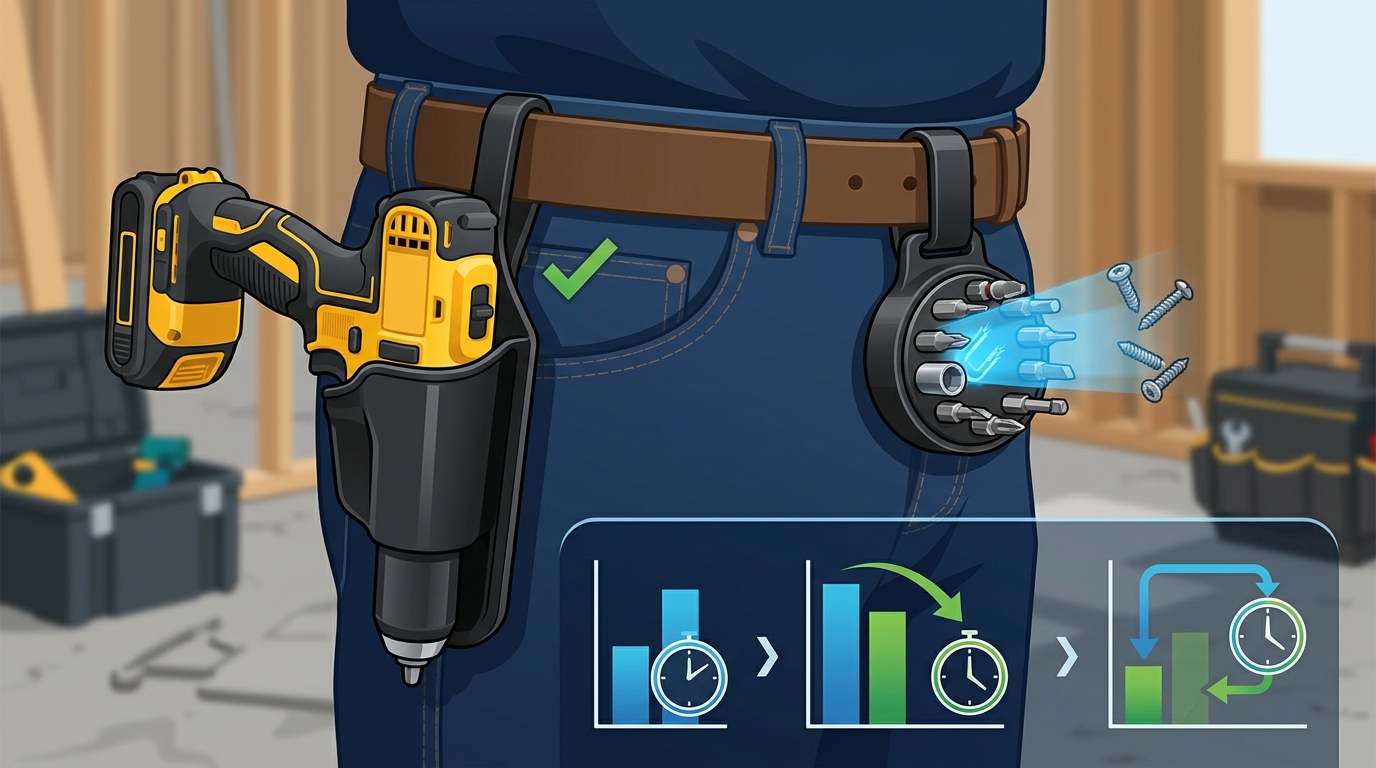
Comparison Table: Key Differences
The following table summarizes the critical differences between Drill Caddies and Bit Caddies to assist in your decision-making process.
| Feature | Drill Caddy | Bit Caddy |
|---|---|---|
| Primary Function | Stores cordless drills and impact drivers | Organizes drill bits and small fasteners |
| Attachment Type | Heavy-duty belt clip or loop | Lightweight clip or snap attachment |
| Weight Capacity | High (supports 2-5 lbs) | Low (supports 0.5-1 lb) |
| Versatility | Low (tool-specific) | High (modular and expandable) |
| Best For | Electricians, HVAC, heavy construction | Carpenters, finishers, detail work |
For those interested in the technical specifications of tool storage materials, the Tool Studies material comparison guide provides detailed insights into the durability of various plastics and metals used in these products.
Key Takeaways
- Specialization vs. Versatility: Drill Caddies are specialized for power tools, while Bit Caddies offer versatile storage for small hardware.
- Attachment Security: Both systems rely on direct pants attachment, but Drill Caddies require heavier-duty clips to support tool weight.
- Ergonomic Impact: Drill Caddies add significant weight to one side, necessitating load balancing to prevent back strain.
- Workflow Efficiency: Bit Caddies reduce time spent searching for bits, which is critical for detailed assembly tasks.
- Modularity: Bit Caddies are often more modular, allowing for expansion and customization based on user needs.
- Industry Trends: The trade industry is seeing a shift toward modular storage solutions that minimize belt bulk and maximize accessibility.
- Cost Considerations: Drill Caddies are generally more expensive due to their robust construction, while Bit Caddies offer a cost-effective solution for small tool organization.
Frequently Asked Questions
Can I attach a Bit Caddy directly to my work pants?
Yes, most Bit Caddies are designed with clips or loops that attach directly to the belt loops of work pants. This provides a secure and convenient way to keep bits within reach without adding bulk to the belt itself.
What is the main difference between a Drill Caddy and a Bit Caddy?
The main difference is the type of tool they store. A Drill Caddy is designed to hold a cordless drill or impact driver, while a Bit Caddy is designed to organize small items like drill bits and screwdriver bits.
Which is better for heavy-duty construction work?
For heavy-duty construction, a Drill Caddy is often preferred because it keeps the primary power tool secure and accessible. However, it is important to balance the load with other tools to maintain ergonomic comfort.
How do I choose the right attachment for my belt?
Consider the weight of the tools you carry and the type of belt you use. Heavy-duty belts may require robust clips, while lighter belts may benefit from modular attachment systems that distribute weight more evenly.
Are Bit Caddies compatible with all types of drill bits?
Most Bit Caddies are designed to hold standard-sized bits. However, it is important to check the specific dimensions of the storage slots to ensure compatibility with your particular bit set.
Can I use a Drill Caddy for other power tools?
While some Drill Caddies may accommodate smaller power tools, they are primarily designed for drills and impact drivers. Using them for other tools may result in a poor fit and reduced security.
What materials are Drill Caddies typically made from?
Drill Caddies are typically made from durable plastics like nylon or ABS, often reinforced with metal clips to ensure they can withstand the weight and vibration of power tools.
Conclusion and Recommendation
Choosing between a Drill Caddy and a Bit Caddy depends on your specific professional needs. If your work involves frequent use of power tools, a Drill Caddy provides the necessary security and accessibility. If your work requires constant switching between small bits, a Bit Caddy offers superior organization and versatility. For many professionals, a combination of both systems provides the optimal solution, balancing the need for power tool access with efficient small tool management.
To explore our full range of tool storage solutions and find the perfect fit for your workflow, visit our Tool Storage Collection. We offer a curated selection of high-quality Drill Caddies and Bit Caddies designed to enhance your productivity and comfort on the job site.